
Is Kitchen Cabinet Refacing Right for You?
A kitchen can feel dated long before it stops working. Cabinet doors may be worn, the finish may have yellowed, and old hardware can make the whole room look tired. If the cabinet boxes are still solid and the layout works for your household, kitchen cabinet refacing can be a practical way to get a major visual upgrade without taking on a full kitchen demolition.
Refacing is not the right answer for every kitchen. The condition of the existing cabinets, your storage needs, plumbing and electrical plans, and the changes you want to make all matter. A clear assessment at the start helps homeowners invest in the work that will make the biggest difference.
What Kitchen Cabinet Refacing Actually Includes
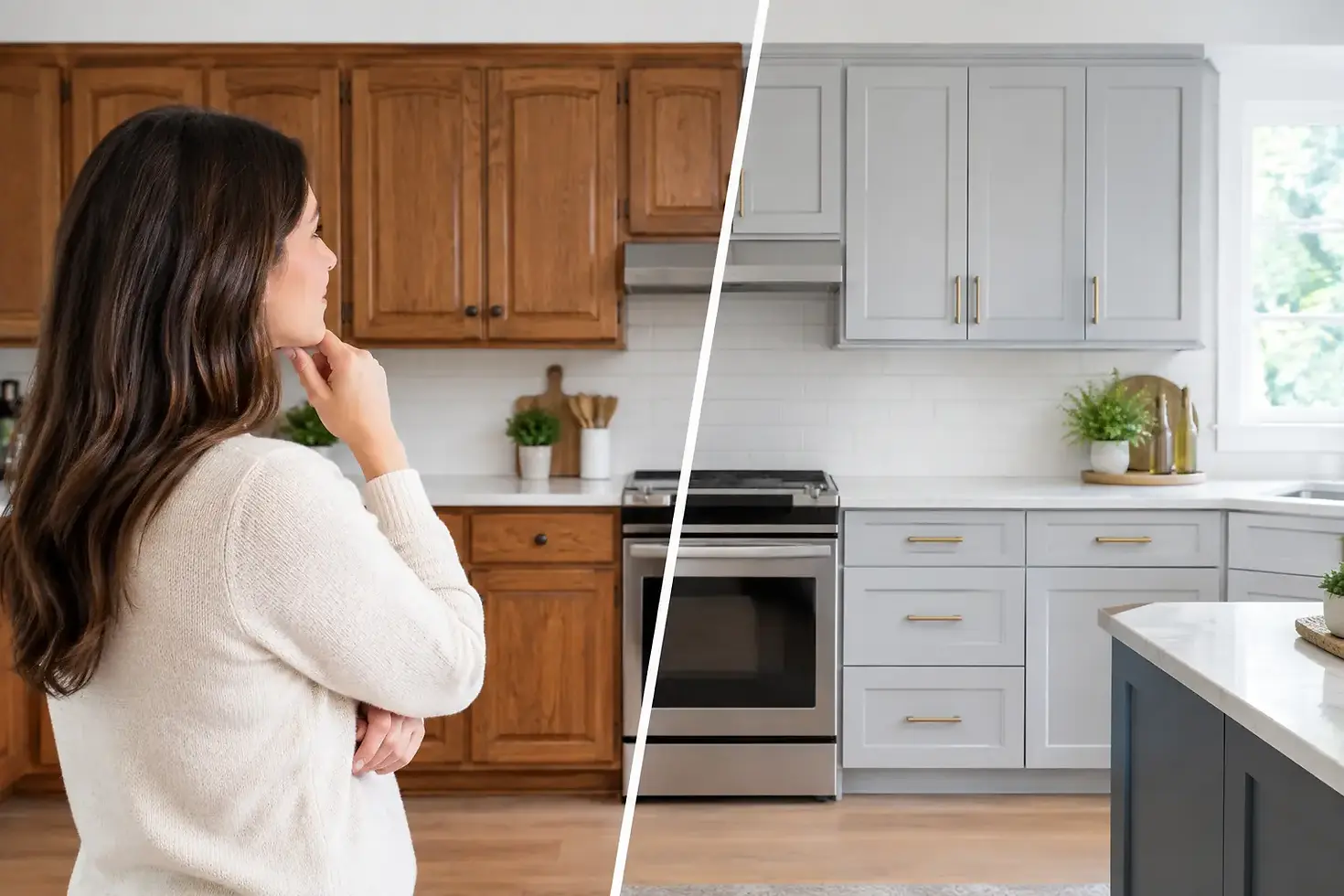
Cabinet refacing keeps the existing cabinet boxes in place. The visible exterior surfaces of those boxes are covered with a new material, while the doors and drawer fronts are replaced. New hinges, pulls, knobs, trim, and finishing details complete the updated look.
The facing material may be wood veneer, rigid thermofoil, laminate, or another finish chosen to fit the kitchen design and budget. Doors can be selected in styles ranging from simple shaker profiles to more traditional raised-panel designs. Because the cabinet boxes remain, refacing generally creates less demolition, less dust, and less disruption than a full replacement.
It is different from cabinet painting. Painting changes the color of existing doors and boxes, but it does not replace damaged doors, update door profiles, or cover every worn edge and exposed surface. Refacing offers a more complete cosmetic transformation when the structure underneath is worth keeping.
When Refacing Makes Sense
The best candidates for refacing have cabinet boxes that are level, securely mounted, and free from serious water damage. Open a few doors and drawers. Look for swollen particleboard, soft spots around the sink base, separating joints, loose backs, or drawers that no longer operate properly. Surface scratches and an outdated finish are one thing. Structural deterioration is another.
Refacing also makes sense when you are satisfied with the kitchen footprint. If the refrigerator, sink, cooktop, and main work areas are where you want them, there may be no reason to remove usable cabinets simply to change their appearance. New doors, updated hardware, a backsplash, flooring, and countertops can make the same layout feel like a new room.
For rental properties, office break rooms, and investment homes, this approach can be especially useful. A clean, durable cabinet finish and modern hardware can improve the space without the extended schedule and added cost of a full rebuild. The key is choosing materials that fit how the space will be used, not just how it looks on installation day.
When Replacement Is the Better Investment
Refacing has limits. It cannot correct a poor layout or create meaningful square footage. If your kitchen lacks pantry storage, has awkward corner cabinets, leaves no room for a dishwasher, or has traffic flow problems, replacing cabinets may give you more value over time.
A full cabinet replacement is usually the better path when cabinet boxes are heavily damaged, poorly built, or no longer securely attached. It is also worth considering when walls need to move, plumbing locations need to change, or electrical work is planned for new lighting and appliances. Trying to preserve old cabinets during a major reconfiguration can create unnecessary compromises.
Homeowners should also think about drawer function. Older kitchens often have shallow drawers, limited pull-out storage, and little room for waste and recycling bins. Refacing can add select upgrades, but a custom cabinet plan provides more freedom to improve organization from the ground up.
The Details That Determine the Final Result
A quality refacing project depends on more than ordering attractive doors. The existing cabinet boxes must be measured carefully, repaired where needed, and prepared for the new finish. Doors need consistent reveals, drawers need to operate correctly, and exposed end panels, toe kicks, and trim need to match the new cabinet face.
This is where workmanship shows. A door that sits slightly uneven or a veneer edge that does not align cleanly can stand out every time you walk into the kitchen. Good installation creates straight lines, even gaps, secure hardware, and finished surfaces that look intentional from every angle.
Countertops deserve planning before cabinet work begins. If you are keeping existing counters, measurements and installation methods must protect them. If new countertops are part of the project, cabinet refacing should be coordinated with the countertop template, backsplash selection, sink, faucet, and any changes to appliances. A simple project can become frustrating when these decisions are made in the wrong order.
Choosing a Style That Will Hold Up
The right cabinet style should work with the home, not fight it. Shaker doors remain a dependable choice because their clean lines fit many kitchens, from older Bucks County homes to newer suburban properties. Flat-panel doors can create a more contemporary look, while traditional raised-panel doors may suit homes with detailed millwork and classic finishes.
Color should be considered alongside the room's natural light, flooring, wall color, and countertop material. Bright white cabinets can make a compact kitchen feel larger, but warmer whites, soft greiges, natural wood tones, and deep painted finishes can bring more character. Darker colors often look best when there is enough light to keep the room from feeling closed in.
Hardware is a smaller decision with a large visual effect. Brushed nickel, matte black, brass, and bronze can each change the personality of the kitchen. More importantly, pulls and knobs should feel comfortable in daily use and be mounted consistently. This is one area where homeowners can add a personal touch without overcomplicating the design.
Budget, Schedule, and Realistic Expectations
Kitchen cabinet refacing often costs less than full replacement because it preserves the cabinet boxes and reduces demolition. Still, the final price depends on the number of cabinets, door style, finish material, hardware, repairs, trim work, and related upgrades such as countertops or tile.
It is not automatically the lowest-cost option. High-end doors, extensive modifications, premium veneers, and a complicated kitchen layout can narrow the price difference between refacing and new cabinetry. An honest estimate should account for the actual condition of the cabinets and the work required to deliver a finished appearance, not just a basic price per door.
The project timeline is generally shorter than a full kitchen remodel, but homeowners should plan for some inconvenience. Cabinet areas must be accessible, and countertops, appliances, or plumbing fixtures may need protection or temporary adjustments depending on the scope. Clear communication about the work sequence helps avoid surprises.
Questions to Ask Before You Commit
Before choosing refacing, ask whether the cabinet boxes are structurally sound, whether the current layout supports how you cook and store items, and whether the finished style will work with the rest of the room. It is also smart to ask how damaged areas will be handled, what materials will be used on exposed surfaces, and whether the contractor will coordinate related work such as tile, drywall repair, painting, flooring, or countertop installation.
For homeowners planning several improvements at once, working with a contractor who can look at the room as a whole can prevent a patchwork result. W Brothers Renovations approaches kitchen work with that full-project mindset, helping property owners match functional needs with finish details that hold up to everyday use.
A well-planned cabinet update should make the kitchen easier to enjoy, not simply newer to look at. If your cabinet boxes are sound and your layout still serves your household, refacing may be the practical next step. Start with a close inspection and a straightforward conversation about what your kitchen needs most.


Comments