
How to Choose Bathroom Tile
A bathroom can look great in a showroom and still be the wrong fit for your home. Tile is one of the biggest reasons why. The right choice has to handle moisture, daily wear, cleaning, and the way you actually use the space. If you are figuring out how to choose bathroom tile, the best place to start is not color. It is function.
How to choose bathroom tile without costly mistakes
Most bathroom tile problems start when people shop by appearance alone. A polished tile may look sharp under bright lights, but that same surface can feel slick under wet feet. A trendy small-format mosaic may catch your eye, but it can mean a lot more grout to clean. A large-format tile may create a clean, modern look, but if your bathroom floor is uneven, installation gets more complicated.
That is why tile selection works best when you look at the room in layers. Floor tile has different demands than shower wall tile. Accent tile has a different job than the field tile that covers most of the room. Once you separate those decisions, the process gets clearer.
Start with where the tile is going
Before you compare styles, define the application. Bathroom floor tile needs durability and traction. Shower floor tile needs even more slip resistance, plus a size that can follow the slope to the drain. Wall tile can be more design-driven because it does not deal with the same foot traffic. Backsplash or accent tile gives you room to add texture or pattern without overwhelming the space.
This is where many homeowners can save money and avoid frustration. You do not need the same tile everywhere. In fact, using one tile for every surface is often not the best solution. A bathroom floor may call for porcelain with a matte finish, while the shower walls may look better with a larger ceramic or porcelain tile that keeps grout lines to a minimum.
Choose the right material first
Material affects performance, maintenance, and price. In most bathrooms, porcelain is the safest all-around option. It is dense, durable, and highly water-resistant. It works well on floors, shower walls, and many shower floors depending on the finish and size.
Ceramic can also be a solid choice, especially for walls. It is often more budget-friendly and comes in a wide range of styles. For many homeowners, ceramic makes sense where heavy wear is not the main concern.
Natural stone has a strong visual impact, but it comes with more upkeep. Marble, slate, and travertine can look excellent in the right bathroom, but they usually need sealing and more careful maintenance. Stone also varies more from piece to piece, which some people love and others find hard to control.
Glass is usually best used as an accent instead of the main surface. It adds light and detail, but it is not always the most practical material for every floor or shower application.
If you want one general rule, it is this: pick the material based on how the surface will perform, then narrow down the design.
Floor tile needs traction, not just style
Bathroom floors deal with water, bare feet, dropped items, and constant cleaning. That makes slip resistance a serious part of the decision. Matte and textured finishes are usually a better fit than highly polished surfaces.
This does not mean the floor has to look rough or overly utilitarian. Many porcelain tiles are made to resemble stone, concrete, or wood while still offering better grip. The key is finding a finish that feels secure without making cleaning more difficult.
It also helps to think about grout. Light grout can brighten the room, but it may show dirt faster. Dark grout hides more, but it can make a small bathroom feel busier if paired with a heavily patterned tile. There is no one right answer here. It depends on the look you want and how much maintenance you are comfortable with.
Size changes the look of the room
Tile size affects both style and function. Large-format tile can make a bathroom feel more open because there are fewer grout lines breaking up the space. It is a popular choice for modern bathrooms and works especially well on walls and larger floors.
Smaller tile has its place too. Mosaics are common on shower floors because they conform better to slopes and provide more grip through additional grout joints. Small tile can also work well as an accent strip, niche detail, or feature wall.
If your bathroom is small, do not assume you must use small tile. That is one of the most common misconceptions. Large tile can actually make a compact room look less busy. The real question is whether the layout and installation conditions support it.
Think about grout as part of the design
People focus on tile and treat grout like an afterthought, but grout has a big impact on the finished result. A matching grout color creates a more uniform look. A contrasting grout color emphasizes the shape and pattern of the tile.
Maintenance matters too. Bathrooms are humid spaces, and grout lines need to hold up over time. Wider grout joints mean more visible grout and more areas to keep clean. Rectified tile can allow tighter joints, but it also needs precise installation.
For many bathrooms, the best grout choice is the one that balances appearance with realism. It should support the design, but it also needs to make sense for a room that gets used every day.
Pick a style that will still work years from now
Bathroom tile is not a quick swap like paint or hardware. Once it is installed, it is part of the room for a long time. That is why it helps to separate timeless choices from short-term trends.
Neutral base tile tends to age better. Whites, soft grays, warm beiges, and natural stone looks give you flexibility if you change paint, fixtures, or decor later. That does not mean the bathroom has to be plain. You can bring in personality through a niche, a feature wall, patterned floor tile, or a border used in moderation.
If you love a bold look, use it where it can stand out without taking over the whole room. Strong design can work very well in a powder room or a guest bath. In a primary bath, many homeowners prefer something that feels clean and steady over time.
Match the tile to the amount of maintenance you want
A beautiful bathroom still has to be cleaned. This is where practical decisions matter. Glossy wall tile may wipe down easily, while textured floor tile may need a bit more scrubbing. Natural stone may need sealing. Tiny mosaic patterns may look detailed and custom, but they create more grout lines.
If you want lower maintenance, larger porcelain tile with a simple finish is often the smart move. It gives you durability, easier cleaning, and a broad range of style options. If design detail matters more than easy upkeep, then more decorative or natural materials may be worth the extra effort.
There is no wrong preference here. The mistake is choosing a high-maintenance material without realizing what comes with it.
How to choose bathroom tile for your budget
Tile pricing is only part of the cost. Installation, layout complexity, surface prep, waterproofing, trim pieces, and grout all affect the final number. A less expensive tile can still lead to a higher project cost if it is harder to install or requires more cuts and specialty work.
This is especially true in older homes, where walls and floors are not always perfectly straight or level. Large tile may require additional prep. Detailed patterns may increase labor. Natural stone may involve extra handling and sealing.
A good tile plan respects the budget without forcing every surface to carry the same price point. One smart approach is to use a reliable, cost-effective field tile in most areas and spend more on a smaller accent area where it will be noticed.
Why samples and layout planning matter
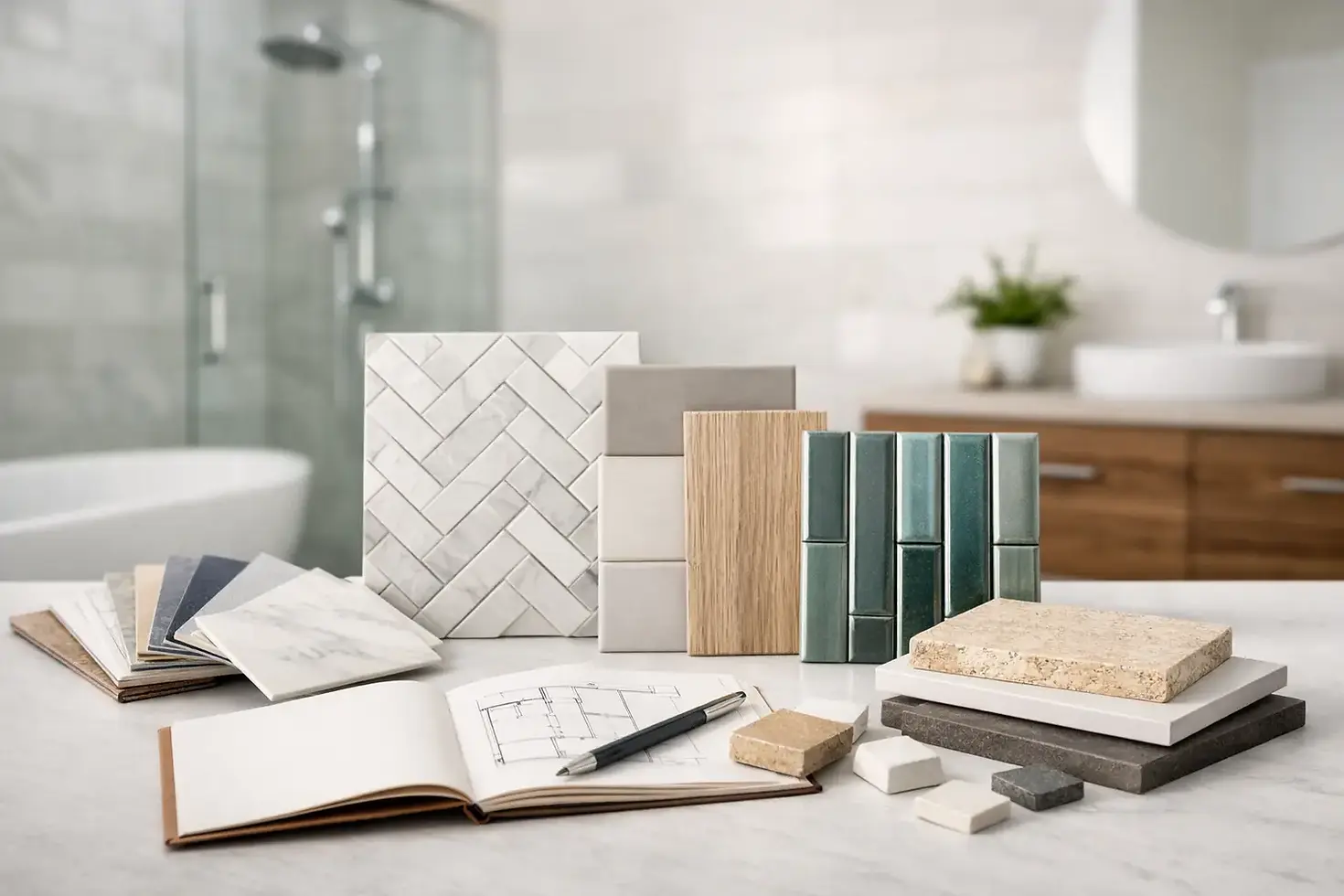
Tile almost always looks different in your bathroom than it does in a store display. Lighting changes the color. Room size changes the scale. Other finishes like vanity color, countertop material, and plumbing fixtures change how the tile reads.
That is why samples matter. Set them in the room. Look at them in morning light and at night. Compare them next to paint, cabinets, and trim. If possible, view the tile wet as well as dry, especially for floor and shower applications.
Layout planning matters just as much. A good installer is not just setting tile. They are thinking about transitions, cuts, symmetry, waterproofing, and how the eye moves through the room. That is where craftsmanship shows up.
The best tile choice is the one that fits the whole bathroom
The strongest bathroom designs are not built around one flashy material. They work because every decision supports the space. The floor feels safe. The shower is practical. The walls are easy to maintain. The style fits the home. The installation is clean and durable.
If you are planning a remodel, take your time with tile. Ask how it will perform, how it will clean up, and how it will look after years of real use. At W Brothers Renovations, that is the kind of thinking that helps turn a good-looking bathroom into one that truly holds up.
The right tile should do more than catch your eye. It should make the room work better every day.


Comments